


May 23 is the liturgical feast of St. Jeanne Antide, and remembering her is an opportunity to deepen our understanding of her writings, to better understand the spirit that animated her and to take up her educational passion, making it a reality today. The clarity of her mission resounds loudly in our hearts, “Can charity have a noblergoal? Does not teaching the poor, the sick and even children to know, love and serve God mean fulfilling in part what the Saviour of the world came to do on earth.” (Introduction to the vows) Continuing her legacy, how can we make this challenge a reality today? We must begin by doing what she said, “In everything I took advice from God, circumstances and time” (Letter to Bishop Lecoz, 1812).
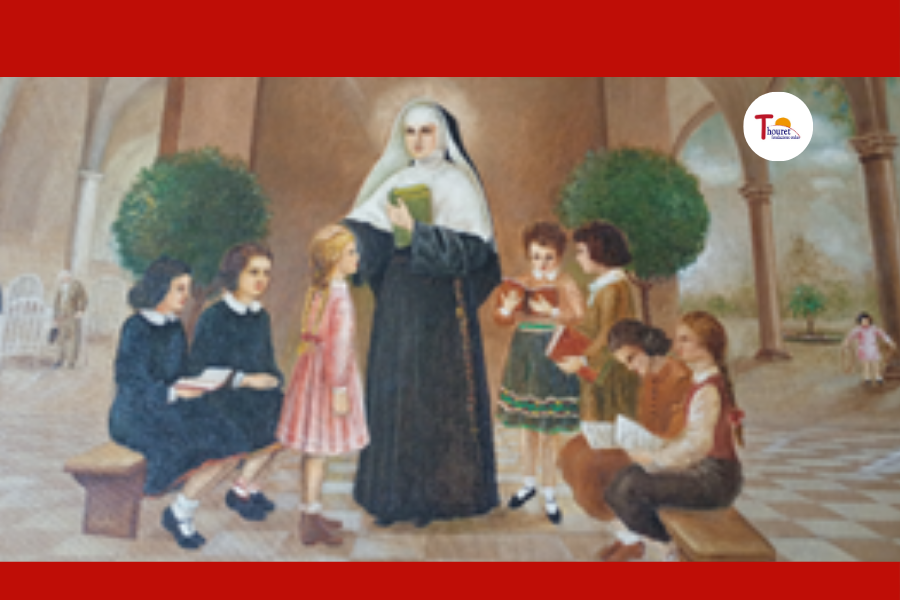
Nowadays circumstances are marked by a invitation to ecological conversion and synodality, to a new harmony leading to peace and complementarity, to new paths of humanisation and technology at the service of human beings and care for the planet. The final document of the Synod on Synodality says that the world needs models and that we can find “in the Virgin Mary, the characteristics of a synodal, missionary and merciful Church that listens, prays, meditates, dialogues, accompanies, discerns, decides and acts. From her we learn the art of listening, paying attention to God’s will, obedience to his Word, the ability to grasp the needs of the poor, the courage to set out, the love that helps, the song of praise and rejoicing in the Spirit’. N° 29) I believe that these same traits can be found in Saint Jeanne Antida who was able to “open by herself a school that soon became very numerous” (Manuscript of the Pure Truth) and for which she had to apply all her creativity by implementing a collective method that differed from the individual teaching of her time. The Lord makes the work of his hands prosper and he is gradually obtaining companions… daughters to educate and train for religious life and work… who are called to various works of charity… ‘and all are very satisfied with their action’ (Letter to Mosns Lecoz)… She then experiences a true conversion from ‘alone to us’… And she took the time to write a rule so that all the sisters could live their vocation freely and consciously.
A decade later, the Lord invited her to a universal mission and she crossed the Alps to the distant kingdom of Naples with its different language, culture and style… With all her audacity and trust in God, she lived this new conversion that led her to respond with the same enthusiastic charity as always, however with new expressions, for which the Rule and vows had to be adapted. With that same courage we are called today to lay “our hands on the dough” and start creating those spaces where the alternative happens. For example, here in Puerto Triunfo, Paraguay, we establish two small school facilities, one in Triunfo and the other in Cristo Rey, where children can go to school to do homework, since their parents do not have the possibility to help them due to their limited level of education or the long hours of work to ensure their well-being.
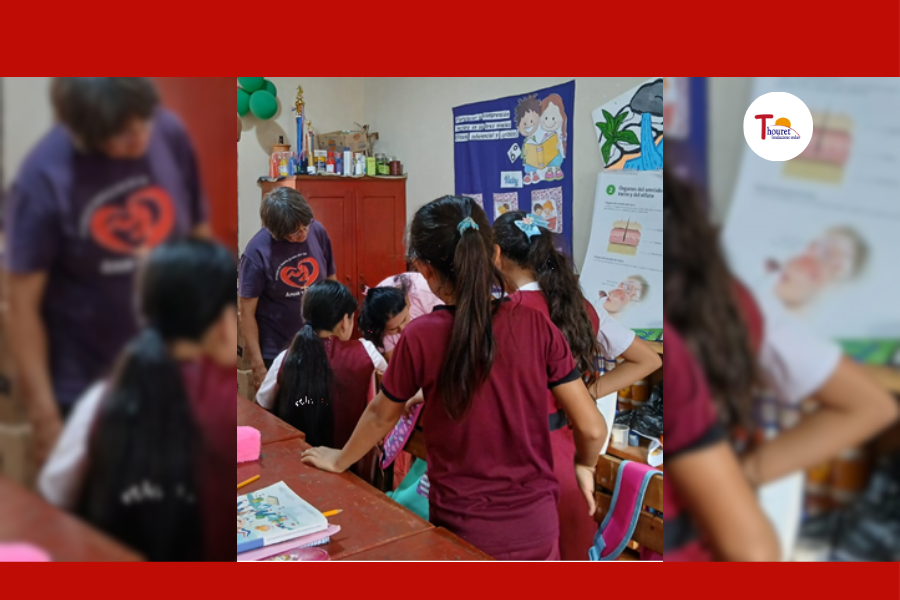
How to be “the alternative”? The educational systems promoted by our governments are not so much concerned with the growth of students as they are with keeping them in school, even if they arrive at sixth grade almost without reading or writing, so that they can present their numbers to the international control bodies. Certainly, for Joan Antida, education was a way to “make a small social revolution”, giving tools to the poor and especially to women, so that they would become aware of their dignity as sons and daughters of God. She did this by sharing her knowledge so that others would not be prevented from reading and writing as she did as a child… And here we are, 226 years after, struggling to ‘make a different’… so that they might not only read, write, add, subtract, divide and multiply, but also become the protagonists of their own history, that is, feeling that they are participants and performers in a common destiny that overcomes an individualistic conception of happiness and connects them to God’s plan in liberty and communion, engaging with all their strength to work for the common good, justice and peace. Also through tailoring, information or gardening courses, we want to give men and women the opportunity to work together in solidarity, overcoming the signs of history, those signs that come from the time of the War of Independence where ‘only women, elderly and children remained who could not raise their arms’. So the women learned to provide for the expenses of the family by themselves, while the men stayed to have fun and give orders… Nowadays, it is necessary to overcome these wounds and give back to women and men their true role in society and in the family, to be complete and equal in dignity, just as the Father’s willed. As the Family of Saint Jeanne Antida, let us join together to walk in hope, building a world of greater solidarity and awareness of the care of our common home.
Sr Elina Bustos, Puerto Triunfo—Paraguay